

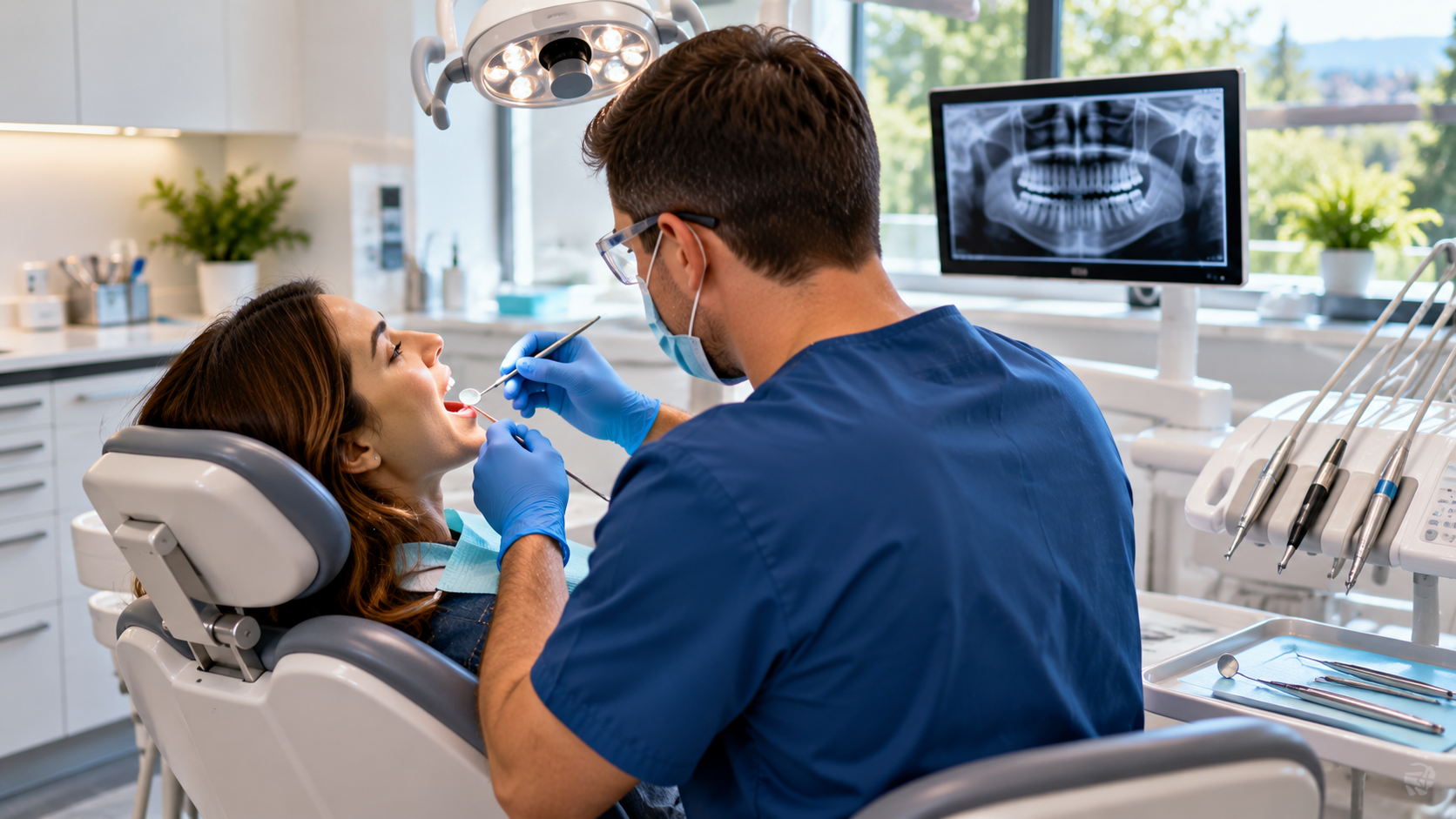
Professional teeth whitening before and after photos can be dramatic or modest, depending on the starting shade of the patient’s teeth, the type of staining present, and the whitening method used. The most important thing any patient can know going in: results are real, but they are not uniform. Understanding what drives the difference is how you set the right expectations before your appointment.
At Newfield Dental in Stamford, CT, we offer Zoom in-office whitening and custom take-home tray systems. Most patients see a noticeable improvement. How much improvement depends on factors we will walk through below, including your natural enamel shade, the type of staining you have, and what you do in the 48 hours after treatment.
What professional whitening results actually look like
Dentists measure tooth color using the Vita shade guide, a standardized scale that runs from A1 (the lightest natural shade) through D4 (the darkest). Most adults who have not whitened their teeth sit somewhere in the B-C range. Patients with coffee, tea, or tobacco staining often start darker.
| Starting shade range | Typical result (in-office) | Shades improved |
|---|---|---|
| B2-B3 (light-medium) | A1-A2 | 2-4 shades |
| A3-A3.5 (medium) | A1-A2 | 3-5 shades |
| C2-C3 (medium-dark) | A2-B2 | 3-6 shades |
| D3-D4 (dark, heavy staining) | B2-C1 | 2-4 shades* |
*Heavily stained teeth may require multiple sessions for maximum improvement. Tetracycline (antibiotic) staining responds poorly to peroxide whitening and may be better addressed with veneers or bonding.
The most dramatic before-and-after photos typically show patients who started with significant extrinsic staining from coffee, tea, or tobacco and responded well to peroxide. Patients who start with naturally lighter teeth or minimal staining may see a smaller visible change, even though both results are clinically successful.
Zoom whitening: what to expect in Stamford, CT
Zoom in-office whitening is the most popular professional whitening treatment at Newfield Dental. The appointment takes approximately one hour. Your dentist applies a professional-grade hydrogen peroxide gel to the tooth surfaces, then activates it with a Zoom light. The light accelerates the bleaching process, allowing deeper penetration of the whitening agent into enamel.
Most patients finish a Zoom session 4 to 8 shades lighter on the Vita scale. Results are visible immediately after treatment, though teeth will continue to stabilize over the following 24 to 48 hours as the enamel rehydrates. Some mild sensitivity during or after the appointment is normal and typically resolves within a day or two.
Custom take-home trays from Newfield Dental use a lower-concentration gel worn for one to two hours per day over one to two weeks. The final result is comparable to in-office whitening for most patients, but the timeline is spread out rather than completed in a single visit. Many patients use both: in-office Zoom for an initial dramatic change and take-home trays for maintenance.
You can learn more about both options on our Zoom whitening page and our teeth whitening page.
Who gets the best whitening results?
Not all patients whiten equally. These factors predict better-than-average results:
- Extrinsic staining only: surface stains from food, drink, and tobacco respond best to peroxide whitening
- Younger enamel: enamel thins slightly with age, and older patients may see more sensitivity and slightly less dramatic shade change
- No existing veneers, crowns, or bonding on front teeth: restorations do not respond to bleaching agents and will not change shade
- Natural tooth enamel that is intact and not heavily etched or worn
- Non-smoker, or smoker willing to stop during and after treatment to preserve results
These factors predict more limited results:
- Intrinsic staining: discoloration that originates inside the tooth from tetracycline antibiotics, fluorosis (excess fluoride during development), or tooth trauma responds poorly to whitening
- Very dark starting shade: heavily stained teeth can improve significantly but may not reach the lightest natural shades in a single treatment
- Existing dental work on visible teeth: crowns, veneers, and composite bonding will remain their original shade after whitening, potentially creating a mismatch
Patients whose staining does not respond adequately to whitening, or who have intrinsic discoloration, are often better served by dental bonding or porcelain veneers. Both can address discoloration that whitening cannot. See our dental bonding page and porcelain veneers page for details.
Newfield Dental · Stamford, CT
Ready to see what whitening can do for your teeth? Newfield Dental will give you an honest assessment of your starting shade and the results you can realistically expect.
How long do teeth whitening results last?
Professional in-office whitening results typically last one to three years, depending on diet, lifestyle, and whether take-home maintenance trays are used. Patients who drink coffee, tea, or red wine regularly, or who smoke, will see results fade faster than patients who limit those exposures.
The first 48 hours after whitening are the most important for preserving results. Enamel is temporarily more porous immediately after treatment, making it more susceptible to absorbing staining compounds. Dentists refer to this as the "white diet" window: avoiding dark-colored foods and drinks during this period protects the freshly whitened surface while enamel rehydrates and hardens.
After 48 hours, the practical rules for maintaining results are:
- Rinse with water after coffee, tea, or red wine when brushing is not immediately possible
- Use a soft-bristle brush and non-abrasive whitening toothpaste for daily maintenance
- Schedule professional cleanings every six months to remove surface staining before it sets
- Use custom take-home trays for a short top-up session every six to twelve months
Complete fading back to the original shade is rare. Studies consistently show that even two years after professional whitening, most patients retain teeth that are measurably lighter than their baseline. Top-up sessions are shorter than the original treatment and restore results quickly.
Professional vs. over-the-counter whitening: what the before-and-afters actually show
Over-the-counter whitening strips, gels, and toothpastes use peroxide concentrations of 3 to 10%. Professional in-office systems use 25 to 40% hydrogen peroxide. That difference is the primary reason professional teeth whitening before and after photos show more dramatic results than at-home products can achieve.
The American Dental Association confirms that professional whitening is safe for tooth enamel when performed correctly. Sensitivity is the most common side effect and is typically temporary. At-home whitening strips used as directed are also safe, but produce results that are smaller in magnitude and shorter in duration.
| Method | Typical shade improvement | Results last |
|---|---|---|
| Zoom in-office (Newfield Dental) | 4-8 shades | 1-3 years |
| Custom take-home trays (dentist) | 3-6 shades over 2 weeks | 1-2 years |
| OTC whitening strips | 1-3 shades | 3-6 months |
| Whitening toothpaste | Surface stain removal only | Ongoing (maintenance) |
Comparison of whitening methods by typical result and longevity. Individual results vary based on starting shade, stain type, and post-treatment maintenance.
Frequently asked questions
How many shades can teeth whitening realistically achieve?
Most patients achieve 3 to 8 shades of improvement with professional in-office whitening. The exact number depends on starting shade, type of staining, and enamel density. Patients with significant extrinsic staining from coffee, tea, or tobacco often see the most dramatic before-and-after results. Patients with lighter natural teeth or intrinsic staining see more modest changes.
How long does teeth whitening last?
Professional in-office whitening results typically last one to three years with normal care. Lifestyle factors have the biggest impact: patients who consume staining foods and drinks frequently or who smoke will see results fade faster. Maintaining results with periodic take-home tray touch-ups every six to twelve months is the most cost-effective way to keep teeth at their new shade long-term.
Does teeth whitening work on veneers, crowns, or bonding?
No. Bleaching agents only work on natural tooth enamel. Porcelain, ceramic, and composite materials do not respond to peroxide whitening. If you have existing restorations on your visible front teeth, whitening your natural teeth may create a shade mismatch. Always discuss existing dental work with your dentist before scheduling whitening. In some cases, the better approach is to whiten first and then replace older restorations to match the new shade.
Is professional teeth whitening safe?
Yes, when performed by or under the supervision of a licensed dentist. The American Dental Association endorses professionally-supervised whitening as safe and effective for most patients. The most common side effect is temporary sensitivity, which resolves within 24 to 48 hours. Patients with existing tooth sensitivity, cracked teeth, or gum disease should discuss their situation with a dentist before whitening, as these conditions may affect how treatment is approached.
If you are ready to see what professional whitening can do for your smile, the team at Newfield Dental in Stamford is here to help you understand your options and set realistic expectations before you begin. Schedule your whitening consultation online or call us at (203) 883-6967. We serve patients from Stamford, Greenwich, Darien, New Canaan, and across Fairfield County.